Augmentative and Alternative Communication (AAC)
Communication is a fundamental human right. For some children, traditional speech is challenging due to developmental or physical conditions. Augmentative and alternative communication (AAC) provides these children with tools to express themselves, connect with others, and participate fully in life. At iThrive Health, we empower children with AAC strategies that promote independence and self-expression.

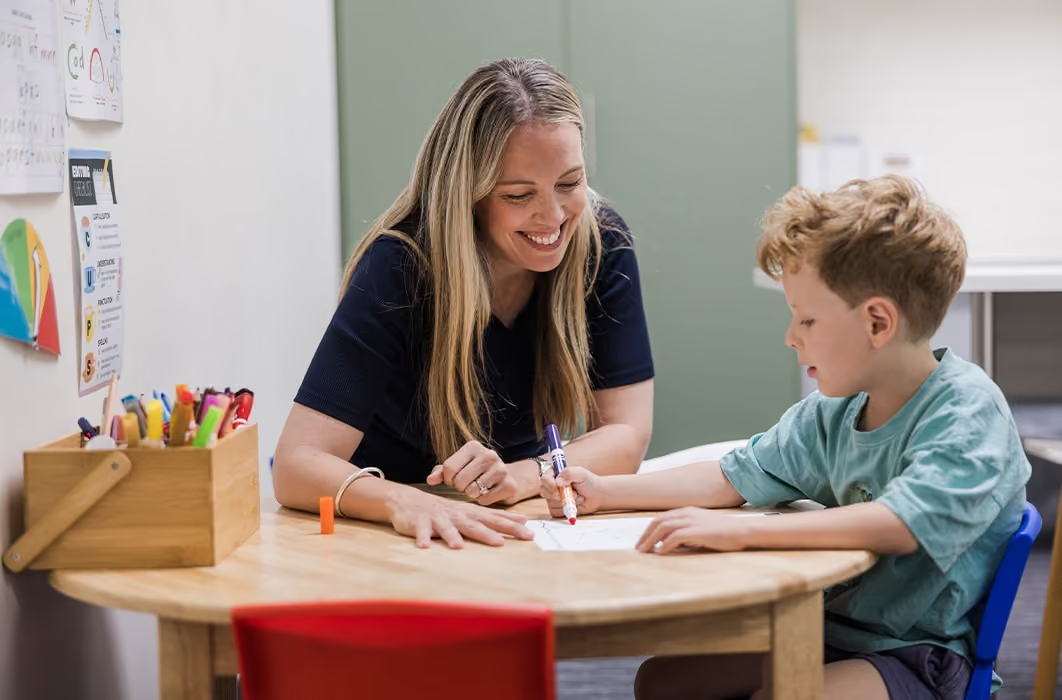
Empowering children to communicate with AAC
AAC includes a range of methods that support or replace spoken communication. These can be as simple as gestures and picture boards or as advanced as speech-generating devices (SGDs) and communication apps. AAC is not just an alternative—it’s an essential part of communication for many children, enabling them to connect with family, friends, and their community. There are two main types of AAC: Unaided AAC: Involves gestures, facial expressions, and sign language. Aided AAC: Uses external tools like picture cards, communication boards, or electronic devices.
When is AAC recommended?
AAC can be introduced at any age if verbal communication is limited. It is commonly recommended for children with Autism Spectrum Disorder (ASD), Cerebral Palsy, Down Syndrome, and speech apraxia. Research shows that AAC can actually support spoken language development by providing a communication bridge. At iThrive Health, our Speech Pathologists conduct detailed assessments to identify the most suitable AAC method for each child, ensuring it matches their abilities and developmental needs.
Benefits of AAC
Introducing AAC can be life-changing, providing children with a voice and reducing frustration. It enhances communication, improves social interactions, and supports learning by reinforcing concepts through visual and interactive tools. With effective AAC, children gain confidence, independence, and a stronger sense of belonging.
How we can help
At iThrive Health, we are committed to helping children find their voice through AAC. Our approach includes: Device Selection: Matching your child with the most appropriate AAC tools. Training and Support: Teaching effective use of AAC at home and in social settings. Integration into Daily Life: Supporting families to use AAC consistently in everyday routines. Collaboration with Educators and Therapists: Ensuring cohesive support across all environments. We believe every child deserves the chance to communicate confidently and independently. If you think your child could benefit from AAC, reach out to us at iThrive Health. Together, we can unlock their voice and expand their world.
